
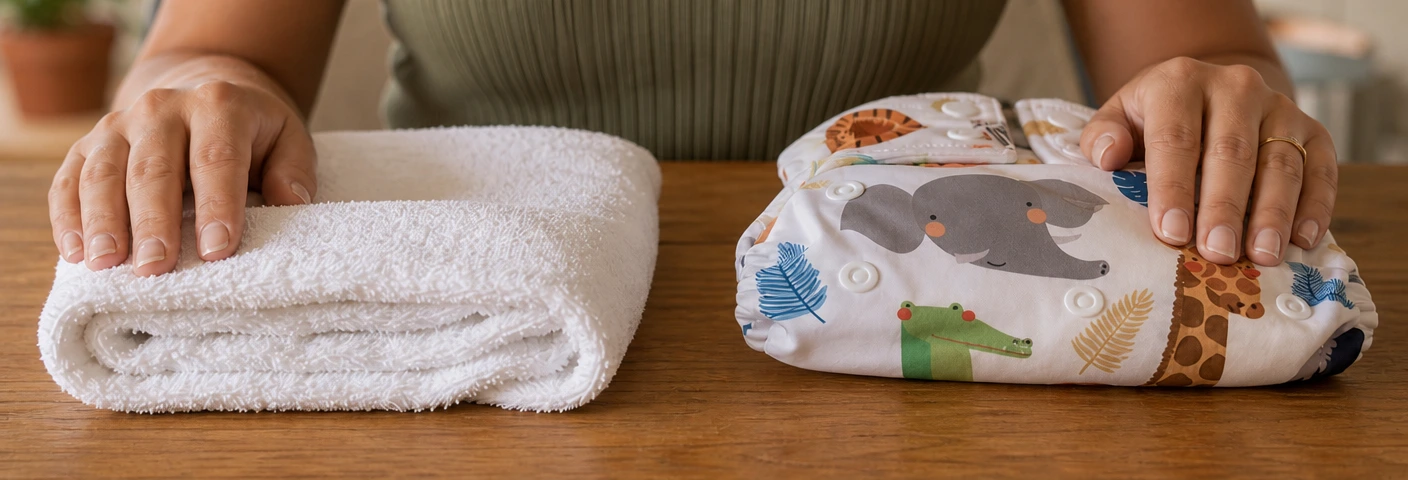
Your mom used towel nappies. Folded them, pinned them, boiled them on a Sunday. She also drove without a seatbelt and let you ride loose in the boot to the shops. Times change, and so did nappies.
If you’ve landed here because your mom mentioned terry squares, or you saw a #reusable post on Instagram and got curious, welcome. This isn’t a guilt trip about landfill. It’s an honest look at towel nappies versus what’s replaced them — modern cloth nappies — so you can actually decide what works for your life, with real South African numbers instead of guesswork.
What towel nappies actually are
Towel nappies, also called terry squares, terry nappies, or flat nappies, are exactly what they sound like: a square of woven cotton or bamboo terry. Most SA retail packs — Woolworths, PnP, Checkers — sell them at 68cm x 68cm to 70cm x 70cm. You fold it (origami fold, kite fold, angel wing — there are entire tutorials for this), secure it with a Snappi or an old-school safety pin, then pop a waterproof cover over the top.
They’re cheap per unit — a 4-pack runs around R30 to R130 depending on brand — genuinely absorbent, and still used in plenty of SA households, often as boosters tucked inside a fitted nappy for overnight.
There’s a fair defence of terry squares in cloth nappy communities too: many long-time users argue they dry faster on the line than bulkier modern inserts, and a well-folded terry square handles a heavy overnight wetter better than people expect.
What they’re not is quick. Every single change involves folding, pinning, and a separate waterproof cover — and if any one of those three steps goes wrong, you’re dealing with a leak.
Terry squares also don’t hold their shape the way modern nappies do. As your baby grows from newborn to toddler, the fold has to change too — which means learning several folding techniques over the nappy years, not just one. It’s not difficult exactly. It’s just more admin than most 2026 parents have bandwidth for.
What modern cloth nappies are
Modern cloth nappies took the same basic idea — reusable, washable, not landfill-bound — and re-engineered it for people who don’t have time to fold origami at 3am. No pins. No folding. Snap or velcro waist closures that go on exactly like a disposable.
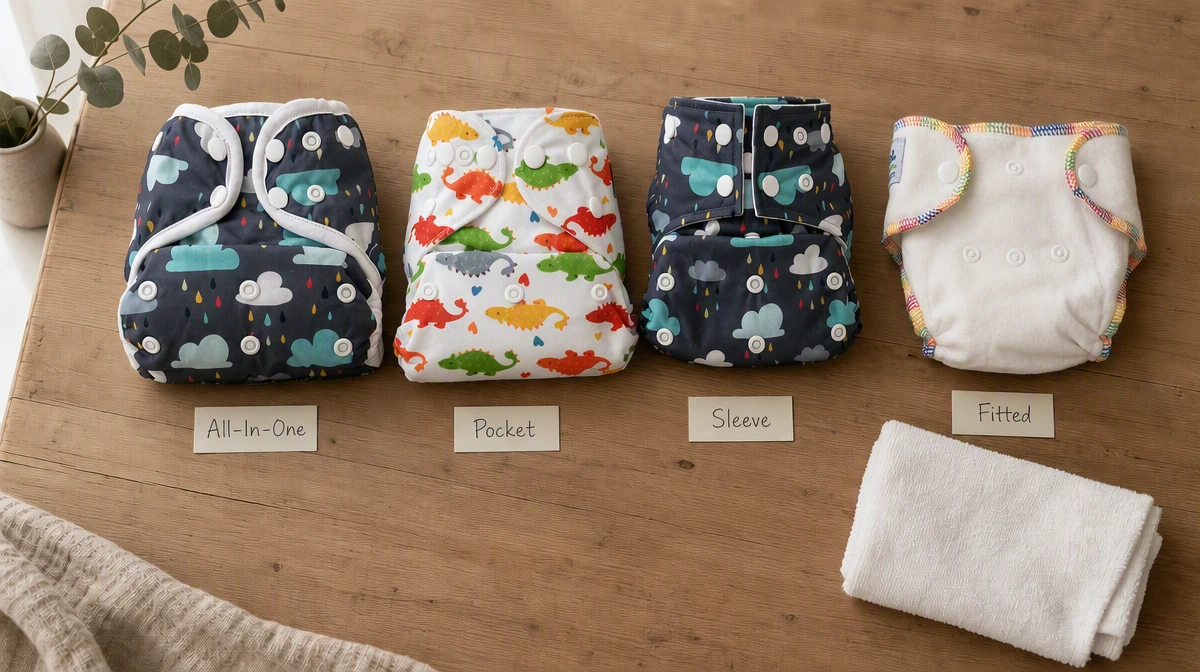
There are a few styles worth knowing: All-In-Ones (AIO), Pocket nappies, Sleeve nappies, and Fitted nappies. Our Sleeve Nappy is the one most new cloth parents land on first — double leg gussets mean the leak protection is built in, not something you’re praying the fold achieves.
Pocket nappies let you customise absorbency by stuffing the insert yourself, which is handy for heavy wetters or overnight use. Fitted nappies, on the other hand, still need a separate waterproof cover, so it’s worth knowing which style needs what before you buy.
The closure system matters more than people expect. Snaps last longer and don’t lose grip over time, but velcro (also called “aplix” in cloth nappy circles) is faster for a squirming toddler who’s suddenly decided nappy changes are a wrestling match. Most modern ranges, including ours, offer both so you’re not locked into one system for the whole nappy journey.
Towel nappies vs modern cloth: the side-by-side
| Towel Nappies | Modern Cloth Nappies | |
|---|---|---|
| Setup per change | Fold + pin + cover | Snap and go |
| Skill required | Learning curve (multiple folds as baby grows) | None — works like a disposable |
| Leak protection | Depends on fold + cover fit | Built-in double gussets |
| Daycare/caregiver friendly | Difficult for anyone unfamiliar with folding | Easy — anyone can use them |
| Retail pack price (4 nappies) | R30–R130 | R680–R900 (4 nappies) |
| Full stash, real prices | R2,000–R3,000 (bulk terry + covers) | R4,500–R6,500 (20–24 nappies + wetbag + wash) |
| Lifespan | 3+ years, but folds change with baby’s size | 3+ years, often multiple babies |
| Best use today | Overnight booster inside a fitted | Full-time nappy system |
If you want the deeper breakdown by style, there’s a full comparison of nappy styles worth bookmarking.
What towel nappies actually get right
Fair’s fair — towel nappies aren’t bad. They’re just work. They’re cheap, they’re absorbent, and if you’re handy with a fold, they do the job.
Plenty of SA parents still use terry squares as night-time boosters because the extra layer of bamboo terry inside a fitted nappy genuinely helps with overnight absorbency. Cloth nappy veterans will also tell you terry squares dry faster on the line than some bulkier modern inserts, which matters in winter or during load-shedding when tumble dryers aren’t an option.
Where they fall down is convenience. Every single change needs a fold, a pin, and a cover that fits properly — and if the cover doesn’t fit right, you’ll know about it.
Handing your baby to a granny, a helper, or a daycare worker who’s never folded a terry square before is asking a lot. And because the right fold changes as your baby grows, you’re not learning one skill once — you’re relearning it every few months.
Why most SA parents switch anyway
Here’s the thing nobody tells you upfront: modern cloth goes on exactly like a disposable. Snap and go. If you can put a disposable on your baby, you can use modern cloth. There’s no separate skill to learn, and no relearning required as your baby grows into a new size.
Don’t just take “cloth is cheaper” at face value. Everyone says that. Most of them are quoting numbers that don’t hold up at checkout.
Here’s the actual maths, using real Bamboo Baby pricing: a full stash of 20 to 24 modern cloth nappies, plus a wetbag and cloth-safe detergent, runs about R4,500 to R6,500 upfront. A baby gets through somewhere between R15,000 and R25,000 in disposables before potty training — real SA estimates land as high as R22,860 to R25,000 over roughly 30 months, and monthly disposable spend alone averages R300 to R720.
That means your stash pays for itself in well under a year. Everything after that is money back in your pocket. And unlike a bag of used disposables, the stash still has resale value when you’re done.
Then there’s skin. Bamboo terry against a baby’s skin tends to cause fewer rashes than synthetic disposables — we hear it constantly from customers, usually some version of “her rash cleared up within a week of switching.” Bamboo grows without pesticides, uses less water than cotton, and is naturally antibacterial. Which is also why it doesn’t stink after a wash.
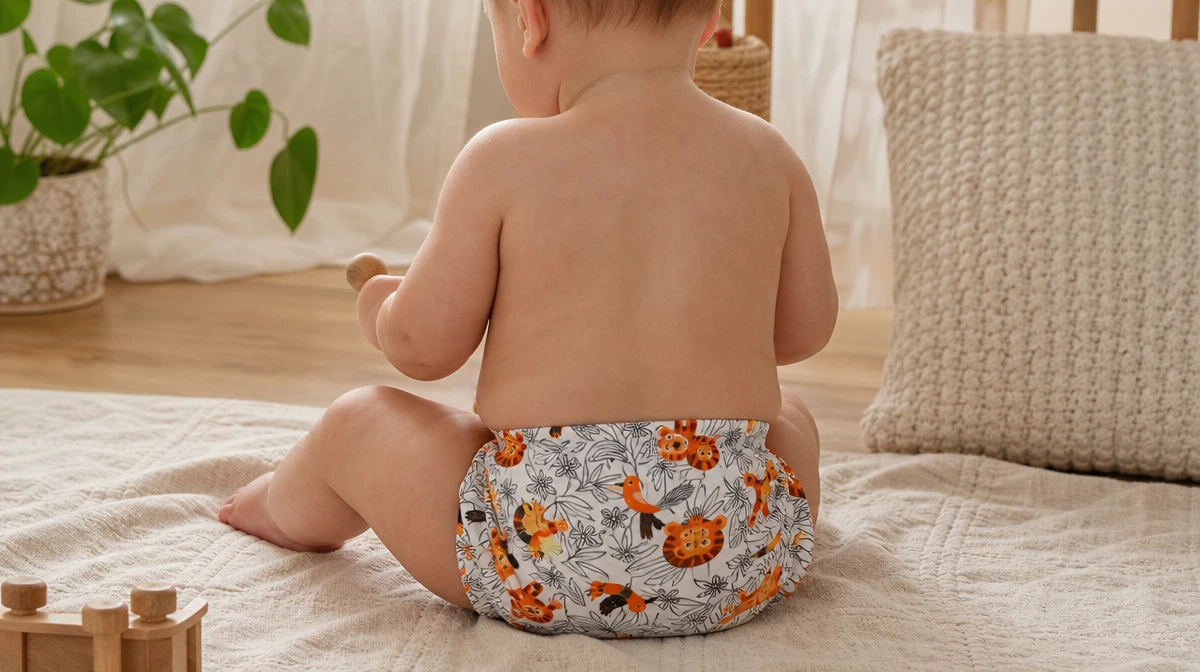
On-the-go days are easier too. A wet bag holds the used nappy until you’re home. No drama, no smell escaping into your car.
Modern cloth needs a cloth-safe detergent, not whatever’s sitting in your regular wash. Super Nappy Wash keeps the fabric performing instead of building up residue that kills absorbency. Half the people who say cloth “doesn’t work” are actually just using the wrong detergent.
And yes, here’s the bonus, not the headline: a cloth stash lasts 3+ years, often through more than one baby. You do the maths on what that saves from landfill.
The average South African child gets through more than 4,000 disposable nappies between birth and potty training, all of which end up in landfill, according to Daily Maverick reporting on SA’s waste crisis. Those nappies take 200 to 500 years to break down, at a time when SA’s landfill capacity is already under serious pressure — a concern WESSA has flagged repeatedly in its waste reduction work.
Cloth just quietly avoids the whole problem. No lecture required.
Real talk: what SA parents actually use in 2026
Terry squares still show up, mostly as overnight boosters. But full-time, most SA parents doing cloth in 2026 have moved to modern styles — snap or velcro, one-size-fits-most from about 5kg to 17kg, no folding required.
Load-shedding means most cloth parents plan washing around outage schedules rather than doing daily loads, and SA’s sun does half the disinfecting work for free on the line. A genuine advantage over countries where cloth nappying means a tumble dryer running non-stop.
Can you mix both?
Absolutely — plenty of parents do. Towel nappies work brilliantly as a booster layer inside a fitted nappy for overnight absorbency, while modern cloth handles daytime, daycare, and anywhere you need speed. You don’t have to pick a side, and there’s no rule that says your nappy drawer has to be one system only.
How to try modern cloth without committing
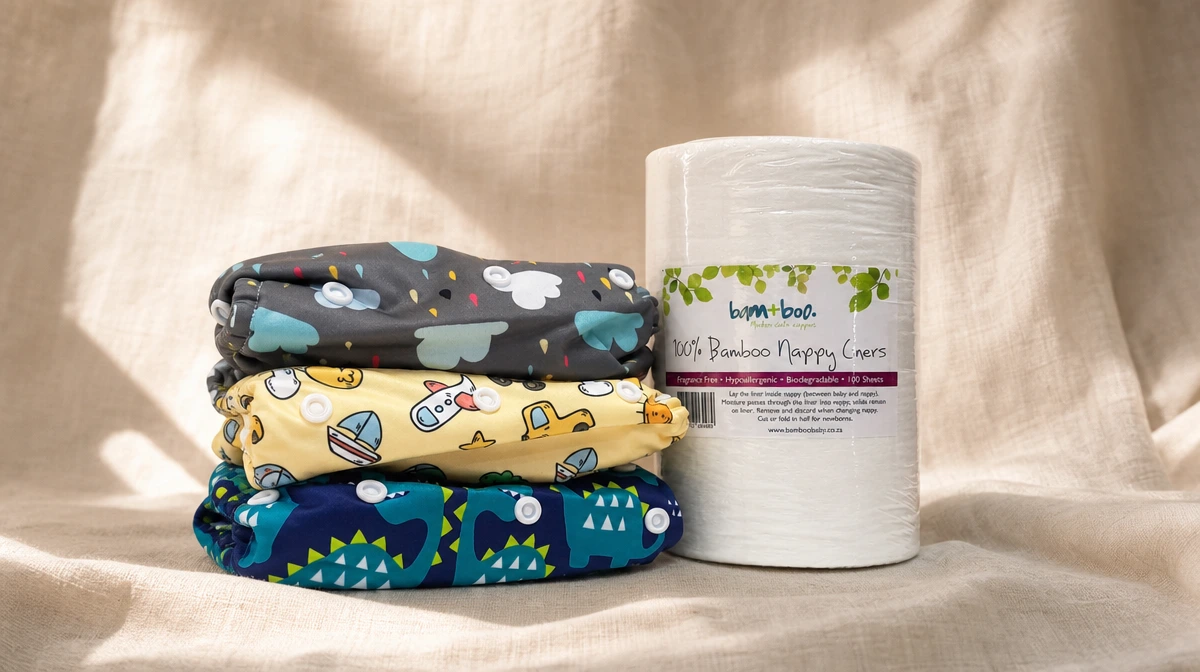
You don’t need to drop R6,000 to find out if this is for you. A discounted Starter Kit lets you try a few different styles for about a week, for under R600. If it’s not for you, no harm done. You’ve spent less than a month of disposables would’ve cost anyway, and you’ll know for certain instead of guessing.
FAQ
Are towel nappies still used in South Africa?
Yep, mostly as an overnight booster tucked inside a fitted nappy. Full-time use has moved on though.
Do modern cloth nappies leak more than towel nappies?
Less, actually. Double leg gussets do the leak-proofing for you. No fold to get right, nothing to second-guess at 2am.
Which is cheaper — towel or modern cloth?
Towel wins on upfront cost (R2,000–R3,000 vs R4,500–R6,500). Disposables lose to both, running R15,000–R25,000 before potty training. Cloth pays for itself either way.
How long do modern cloth nappies last?
3+ years, often for baby number two as well. Just use a proper cloth-safe detergent — regular stuff kills absorbency over time.
Can I use towel nappies as night-time inserts?
Yes, and it’s a genuinely good use for them. Stuff one inside a fitted nappy for overnight and it earns its keep.
Do I need to buy modern cloth nappies AND towel nappies?
No. But if you’ve already got towels lying around, use them as boosters. No rule says you have to pick a team.
Where to buy in South Africa
Bamboo Baby has been in the modern cloth nappy game for 17+ years, based in Westville, KZN, and built specifically for SA weather and water conditions. Made locally, which keeps the carbon footprint down and the turnaround fast.
Browse the cloth nappies range or start with the Starter Kit — free shipping kicks in over R3000.
.